

Welcome Scanclimber part of Alimak Group

Call us

+358 10 680 7000

Monday to Friday

9:00am - 6:00pm

E-mail us

Boost Your Productivity

With Mast Climbing Work Platforms

Our Products

What is a Mast Climbing Work Platform (MCWP)?

A Mast Climbing Work Platform (MCWP) is a type of temporary, powered access equipment designed to lift personnel, tools, and materials to various heights during construction, renovation, and maintenance projects. Unlike traditional scaffolding, Mast climbers offer a vertically moving work deck that provides greater efficiency, higher load capacities, and improved safety for work on building façades or other elevated structures.

Mast climbers are widely used in industries such as construction, façade installation, painting, plastering, glazing, cladding, and inspection. They are valued for their versatility, speed of installation, and ergonomic working conditions compared to scaffolding or boom lifts.

High Load Capacity

Can carry heavy materials along with workers, reducing hoisting needs.

Adjustable Height

Allows work at the optimal ergonomic level, improving productivity.

Faster Installations

Requires less time and labor to set up compared to scaffolding.

Enhanced Safety

Built-in brakes, guardrails, and overload protections enhance worker safety.

Space Efficiency

Requires minimal ground footprint, keeping site access clear.

Main Components and Parts of a Mast Climber

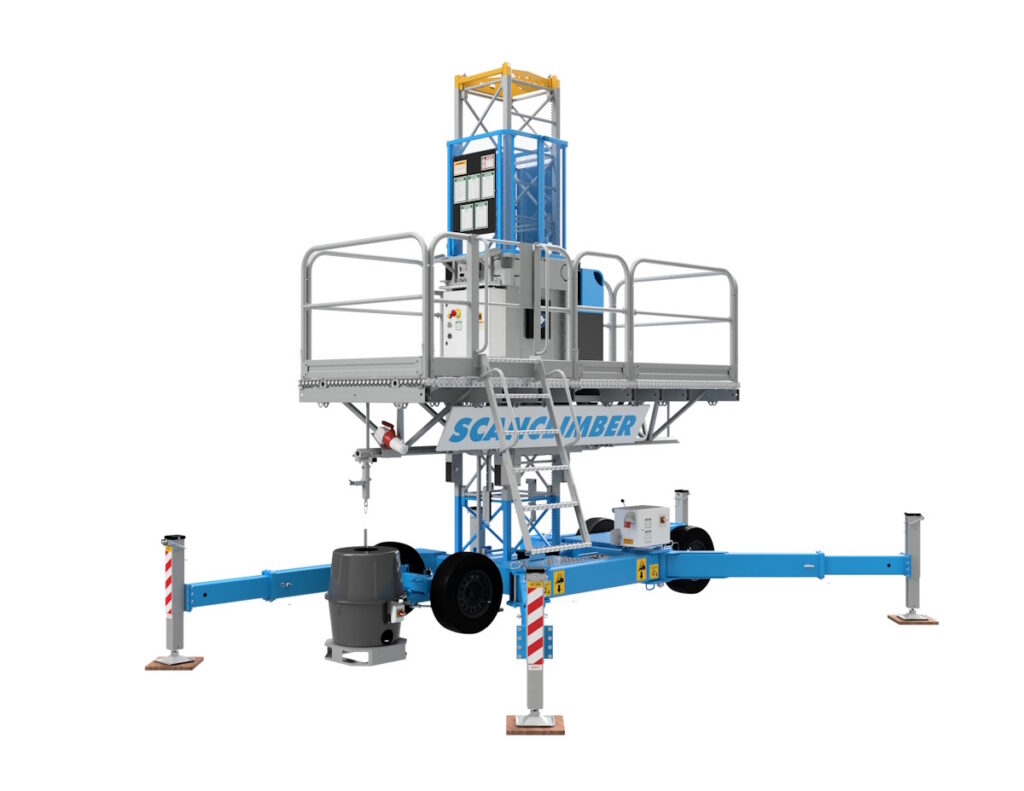
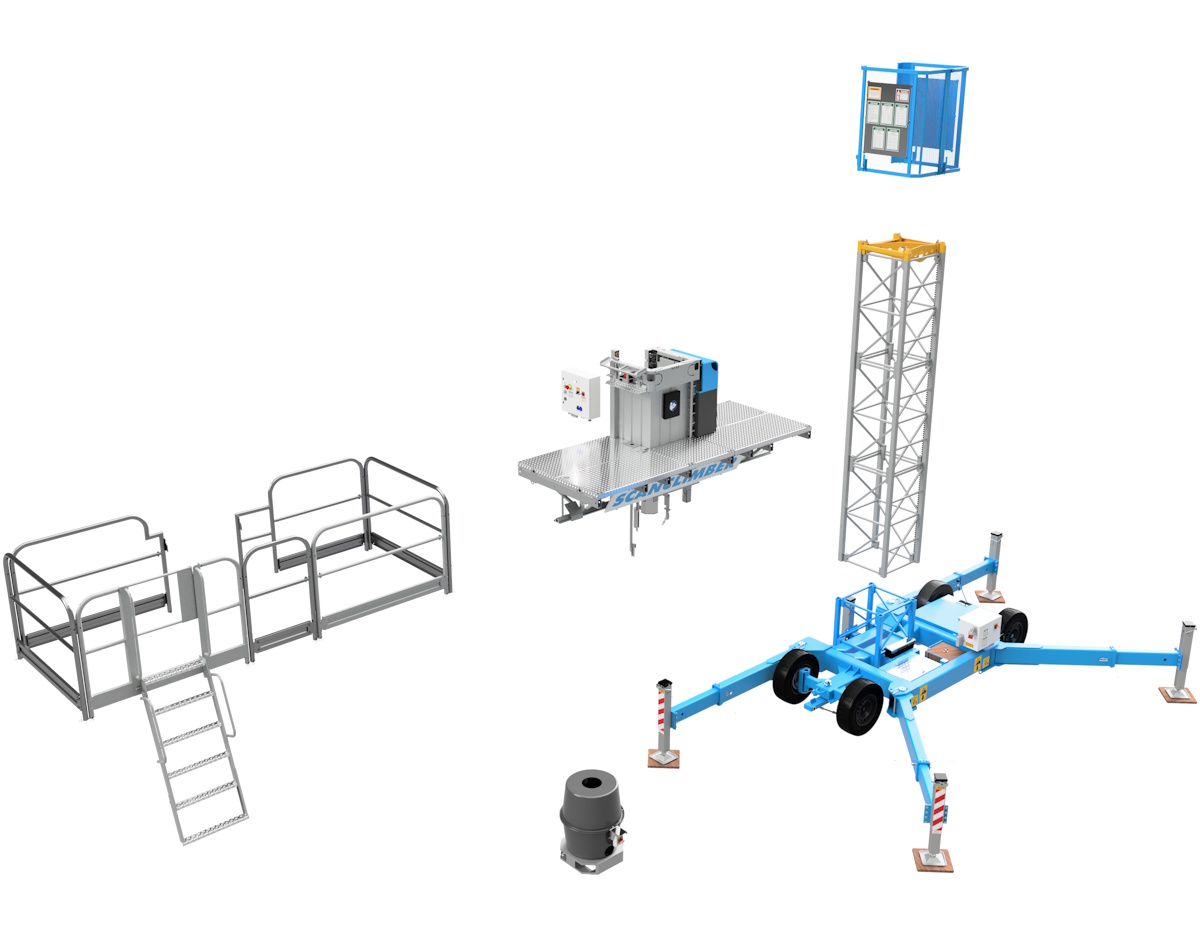
A Mast Climber consists of several key components working together to provide a safe and stable work platform. The diagram below highlights the main parts, with detailed descriptions provided for clarity.

How a Mast Climber Works: A Step-by-Step Process

The Mast Climber operates on a rack-and-pinion system, where a motor-driven gear moves along a toothed mast. The process from setup to operation is systematic to ensure stability and safety.

Assembly and Installation

The mast is erected on the base frame (chassis) and anchored securely to the structure at required intervals. The platform is then mounted onto the mast and connected to the drive system.

Operation

Operators stand on the platform and use the control panel to move up or down. The motor turns the pinion gear, which travels along the rack, lifting or lowering the platform with precision.

Anchoring and Stability

At set heights (usually every 3–30 meters), the mast is tied to the building. This critical step prevents lateral movement, sway, or tipping, ensuring the platform's stability at elevation.

Work at Height

The platform can be stopped at any desired height, providing an ergonomic and stable working level for tasks like façade cladding, bricklaying, or window installation, boosting efficiency.

Primary Industry Applications of Mast Climbers

Mast climbing work platforms are versatile tools utilized across various construction and maintenance sectors.

1
Maintenance
2
Renovation
3
Façade Installation
4
Painting
5
Plastering
6
Glazing
7
Cladding
8
Inspection

Mast Climber vs. Traditional Scaffolding

When compared to traditional scaffolding, Mast Climber offer significant advantages in efficiency and capacity. This chart compares key performance metrics, demonstrating the productivity gains possible with modern access equipment.

High Load Capacity

Ability to carry heavy materials and workers

Adjustable Working Height

Allows work at optimal ergonomic levels

Faster Installation

Requires less time and labor to set up

Safety

Built-in features enhance worker safety

Benefits of
Mast Climbers

Space Efficiency

Minimal ground footprint keeps site access clear

Next
Mast Climbing Work Platforms (MCWP) Compared to Scaffolding: Safety, Cost, and Efficiency

Get in Touch

You will find yourself working in a true partnership that results in an incredible experience, and an end product that is the best.

Call us on

+358 10 680 7000

Email Us